A trip to New Zealand, in pictures and words, from Norman and Hilary
Each section below (1. to 15.) gives a part of Norman’s presentation and a few slides. In total the club presentation had 170 photos and maps to view, due to space limitations, we only have 60 images to view. Some sections have longer text than others, so these sections have ’scrollable’ text, so the whole page isn’t too long!
If the slides move slower than you would like, ‘Click’ the Forward Arrow > to make the change. To slow things down, ‘Click’ to Back Arrow <
If the slides move slower than you would like, ‘Click’ the Forward Arrow > to make the change. To slow things down, ‘Click’ to Back Arrow <
1. In the beginning…
Ever since my school days, when we used to draw countries and put in rivers towns and lakes, I had a desire to visit New Zealand.
Hilary and I have been lucky as our youngest daughter lived in Singapore for almost fourteen years, so every year we spent 30 days there and usually spending 7 days in Malaysia, Thailand etc. but two years we went for longer periods.
Our eldest daughter and family spent a year in Melbourne so that year we made Singapore, Australia and the hop over to N. Zealand.
We thought long and hard how we were going to get around and maximise our trip. Do we take a camper van or hire a car and do B & B.
We decided on a coach tour, which we would join in Auckland at the end of a tour allowing us to visit the Northland - the area north of Auckland.
And so the photo journey begins…
Hilary and I have been lucky as our youngest daughter lived in Singapore for almost fourteen years, so every year we spent 30 days there and usually spending 7 days in Malaysia, Thailand etc. but two years we went for longer periods.
Our eldest daughter and family spent a year in Melbourne so that year we made Singapore, Australia and the hop over to N. Zealand.
We thought long and hard how we were going to get around and maximise our trip. Do we take a camper van or hire a car and do B & B.
We decided on a coach tour, which we would join in Auckland at the end of a tour allowing us to visit the Northland - the area north of Auckland.
And so the photo journey begins…
2. and 3. Starting the journey / Maori woodcraft
North Island
2. Russell in the Bay of Islands was the first permanent settlement and seaport in N. Zealand. Captain Cook was the first European to visit the area in 1769. With whalers coming here towards the end of the century
When European and American ships began visiting in the early 1800' s the indigenous Maori quickly recognised there were great advantages in trading with the strangers. The bay of islands offered a safe anchorage and the large Maori population began to supply food and timber to these new visitors.
What the Maori wanted was respect, plus firearms, alcohol and goods of European manufacture,
Russell developed as a result of this trade, but soon earned a very bad reputation, a community without laws and full of prostitution and became known as the Hellhole of the Pacific.
3. The first European recorded being born in the country was a Thomas King in 1815.
European law had no influence and Maori law was seldom enforced within the town's area.
On the 30th January 1840 at Christ Church, Governor Hobson read his proclamation (which were the beginnings of the Waitangi Treaty) in the presence of a number of settlers and
the Maori Chief Moka who was the only Maori signatory.
The following week the Treaty proceedings would move across the bay to Waitangi.
Trouble flared occasionally between the settlers and the Maori culminating in the Flagstaff war of 1825.
2. Russell in the Bay of Islands was the first permanent settlement and seaport in N. Zealand. Captain Cook was the first European to visit the area in 1769. With whalers coming here towards the end of the century
When European and American ships began visiting in the early 1800' s the indigenous Maori quickly recognised there were great advantages in trading with the strangers. The bay of islands offered a safe anchorage and the large Maori population began to supply food and timber to these new visitors.
What the Maori wanted was respect, plus firearms, alcohol and goods of European manufacture,
Russell developed as a result of this trade, but soon earned a very bad reputation, a community without laws and full of prostitution and became known as the Hellhole of the Pacific.
3. The first European recorded being born in the country was a Thomas King in 1815.
European law had no influence and Maori law was seldom enforced within the town's area.
On the 30th January 1840 at Christ Church, Governor Hobson read his proclamation (which were the beginnings of the Waitangi Treaty) in the presence of a number of settlers and
the Maori Chief Moka who was the only Maori signatory.
The following week the Treaty proceedings would move across the bay to Waitangi.
Trouble flared occasionally between the settlers and the Maori culminating in the Flagstaff war of 1825.





4. and 5. The Kauri Tree / ‘It’s a small world’
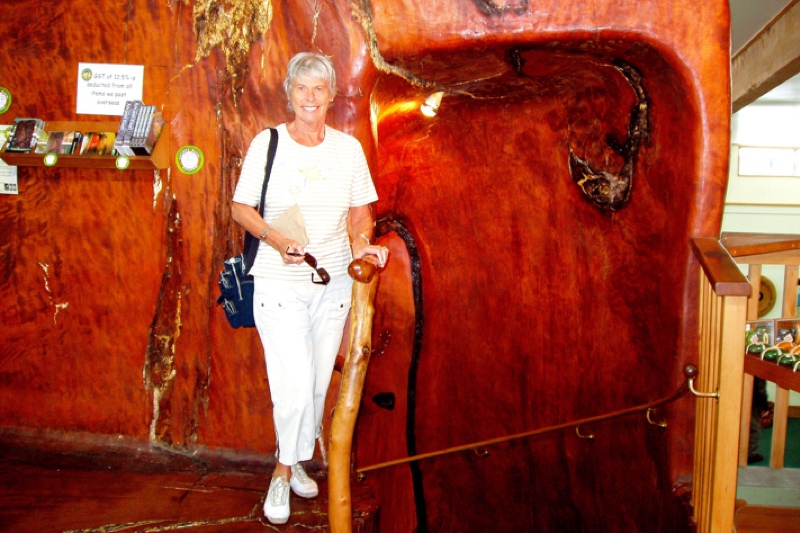
4. The Kauri Tree is the largest tree by volume but not the tallest in N/Z it can raise to 50 meters tall. 90% of the Kauri forests standing in 1000 AD had gone by 1900. The largest recorded was known as the great Ghost and was 26.83 meters in girth.
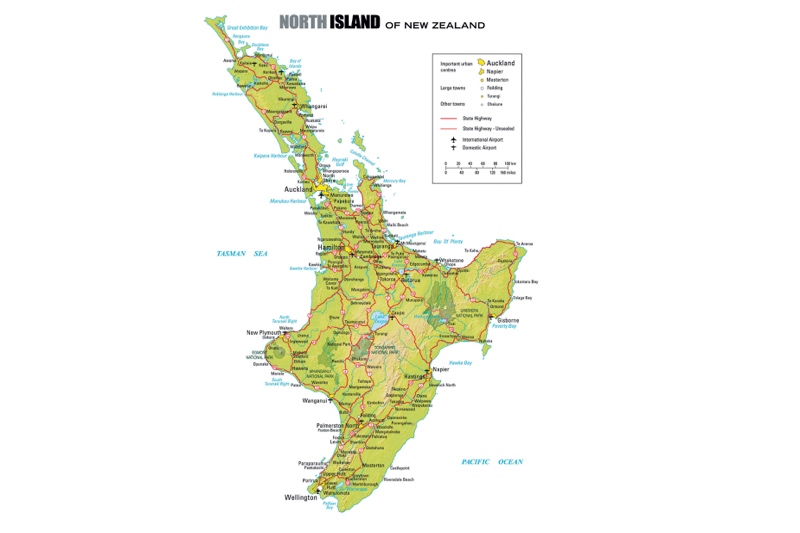
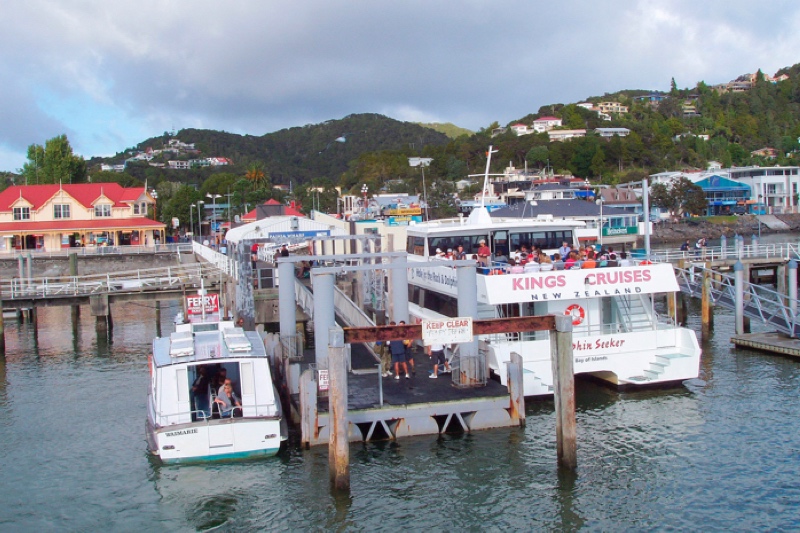
We stop in Paihai for two nights and visit the Waitangi Treaty grounds. Visit the Governor's residence. And then we are off to tour the Bay of islands and its famous tourist destination the hole in the rock. This large bay is really a drowned valley system having 144 islands
5. We thought that we would sit at a table with new tourists and choose one with two couples, one of Asian origin from Doncaster and a Canadian couple.
I asked the English gentleman who was a Doctor if he ever came across a N. Ireland man called Ed. Rainey; he smiled and said that he had been his anaesthetist. Into the meal the Canadian lady said that she had some relations from N. Ireland, she thought from Draperstown called Hanna, Hilary from Moneymore started asking several questions before coming to that the person she was referring to was from Desertmartin and had been one of her mothers best friends.
We stop in Paihai for two nights and visit the Waitangi Treaty grounds. Visit the Governor's residence. And then we are off to tour the Bay of islands and its famous tourist destination the hole in the rock. This large bay is really a drowned valley system having 144 islands
5. We thought that we would sit at a table with new tourists and choose one with two couples, one of Asian origin from Doncaster and a Canadian couple.
I asked the English gentleman who was a Doctor if he ever came across a N. Ireland man called Ed. Rainey; he smiled and said that he had been his anaesthetist. Into the meal the Canadian lady said that she had some relations from N. Ireland, she thought from Draperstown called Hanna, Hilary from Moneymore started asking several questions before coming to that the person she was referring to was from Desertmartin and had been one of her mothers best friends.




6. and 7. Auckland / Rotorua
6. Auckland became the capitol in 1841 and remained so until 1865 when it was deemed that Wellington would make a better site being more central.
Maori first settled the Auckland area around 1350. The population was around 20.000 before European settlers arrived.
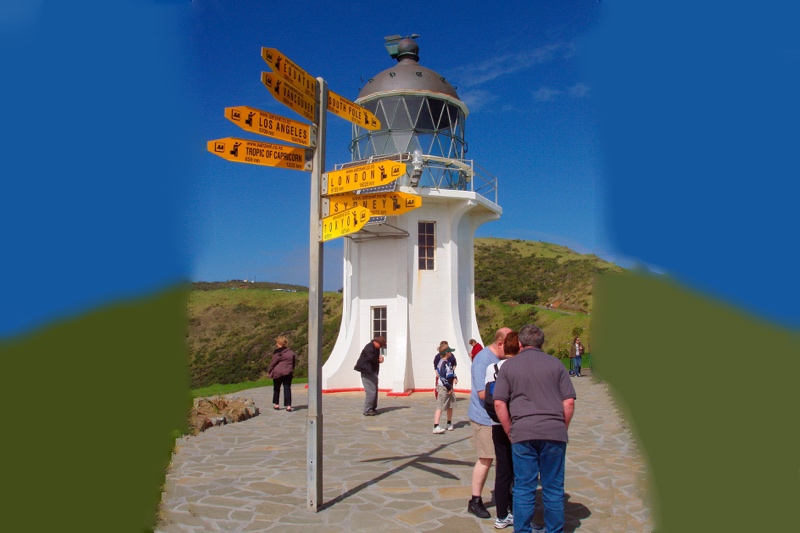
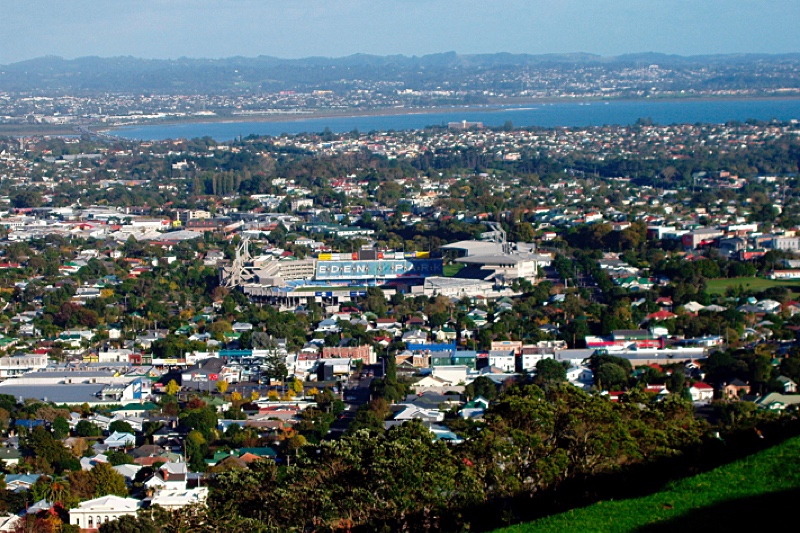
Auckland now has a population of 1.500.000 around 1/3 of the total population. The city is unique in having two harbours one facing West the other East with a little under 2 km of land between. Leaving the Hotel we travel through the city up to Mount Eden a Volcanic Cone and get a birds eye view of the City.
7. Leaving Auckland we travel south to Wautoma where we visited the caves and viewed the Glow Worm Grotto, via a boat trip - A bit like the Marble Arch Caves, which I thought, were better!
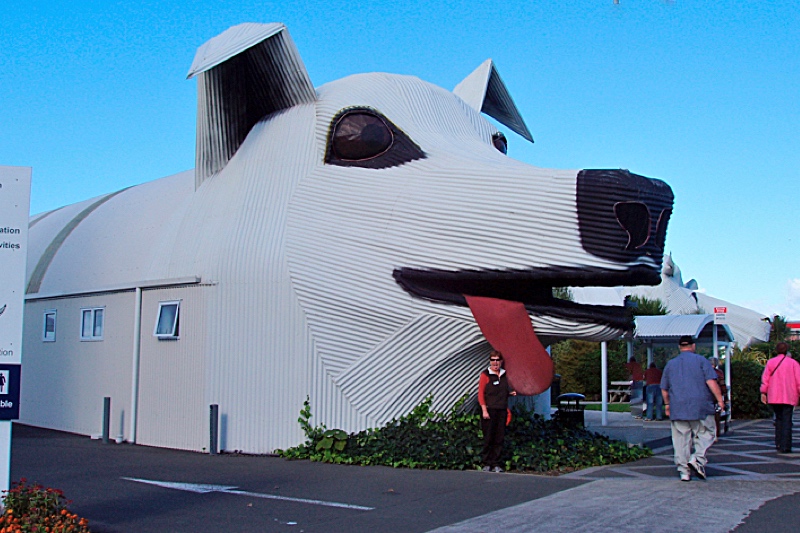
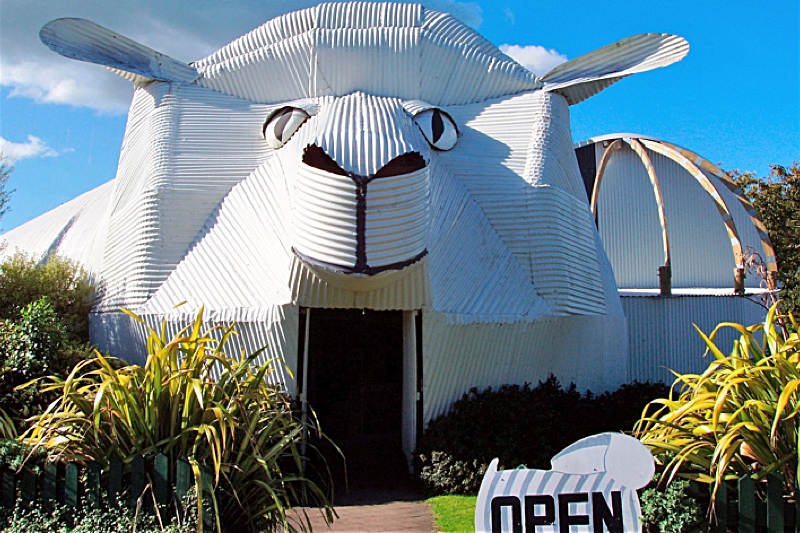
We then journeyed on to Rotorua via Tirau with its odd buildings in corrugated iron and passing through lovely countryside with many stud farms with horses in the fields around Cambridge which had a very English feel to it.
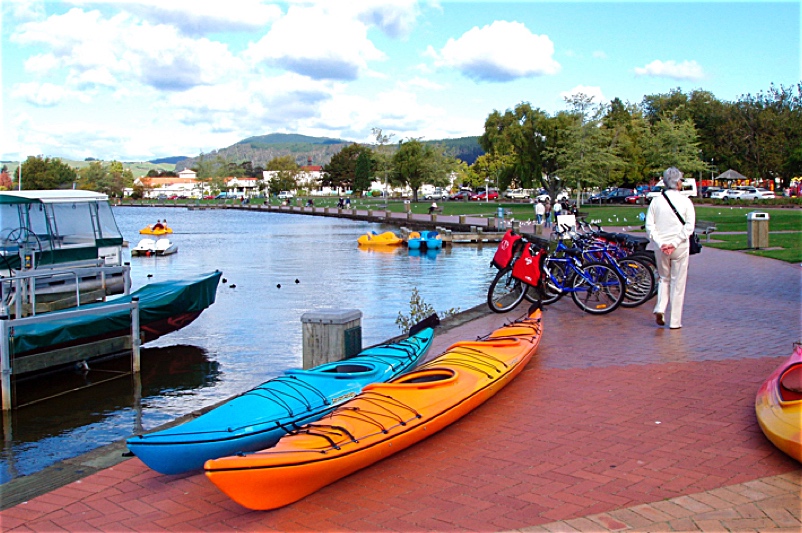
Rotorua sits on the south side of Lake Rotorua, and has a population of around 60.000. The tourist industry is by far the largest industry, having the thermal activity, with its Geysers etc and the Maori Tourist Park.
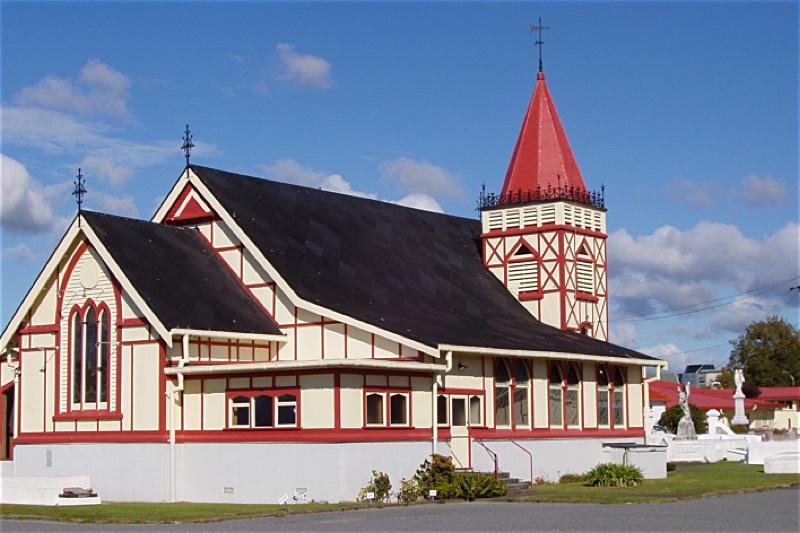
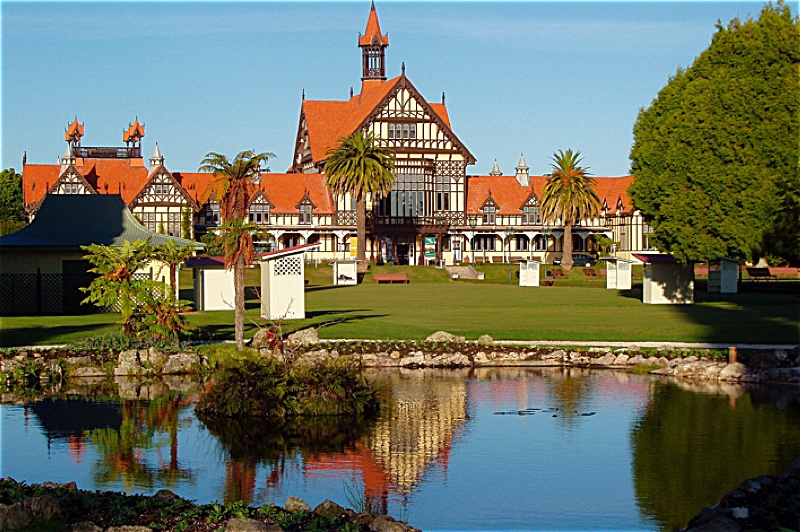
The little island in the lake is called Mokoia. There is a little church on the edge of the Lake, we especially noted the graves, which are above ground. This is a window showing the angel of the lake who was a Maori Princess. The grounds are too hot so they built a little structure and place the coffin in. A ‘must visit’ is the Rotorua Museum and Art Gallery, which was the old Bath House.
Maori first settled the Auckland area around 1350. The population was around 20.000 before European settlers arrived.
Auckland now has a population of 1.500.000 around 1/3 of the total population. The city is unique in having two harbours one facing West the other East with a little under 2 km of land between. Leaving the Hotel we travel through the city up to Mount Eden a Volcanic Cone and get a birds eye view of the City.
7. Leaving Auckland we travel south to Wautoma where we visited the caves and viewed the Glow Worm Grotto, via a boat trip - A bit like the Marble Arch Caves, which I thought, were better!
We then journeyed on to Rotorua via Tirau with its odd buildings in corrugated iron and passing through lovely countryside with many stud farms with horses in the fields around Cambridge which had a very English feel to it.
Rotorua sits on the south side of Lake Rotorua, and has a population of around 60.000. The tourist industry is by far the largest industry, having the thermal activity, with its Geysers etc and the Maori Tourist Park.
The little island in the lake is called Mokoia. There is a little church on the edge of the Lake, we especially noted the graves, which are above ground. This is a window showing the angel of the lake who was a Maori Princess. The grounds are too hot so they built a little structure and place the coffin in. A ‘must visit’ is the Rotorua Museum and Art Gallery, which was the old Bath House.

8. and 9. of Whakario (wood carving) / Wellington
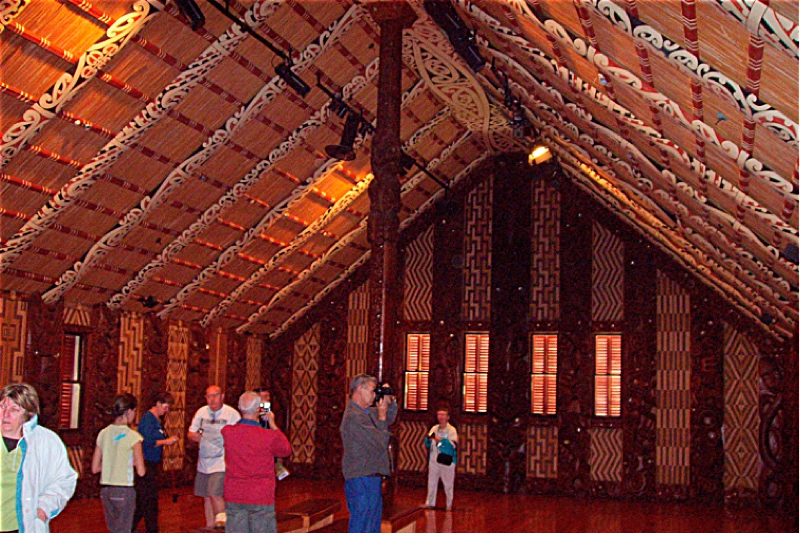
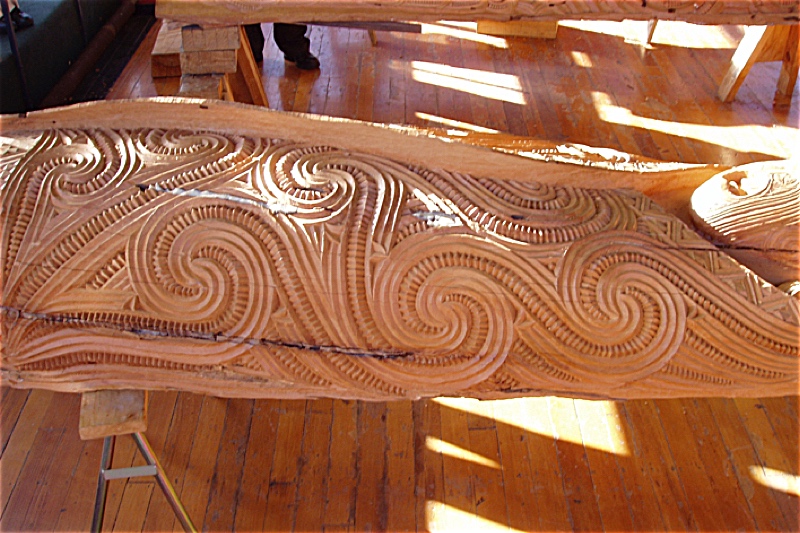
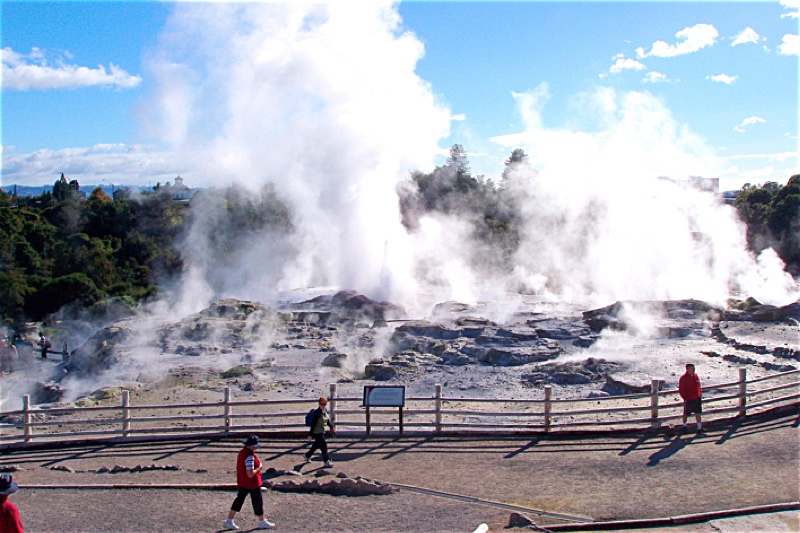
8. We visited the Whakarewarewa Thermal Reserve, and look at the Maori craftsmen perform the traditional art of Whakario (wood carving), also look at their meeting houses and museum before entering the area of pools and geysers of all sizes pumping boiling mud and steam.
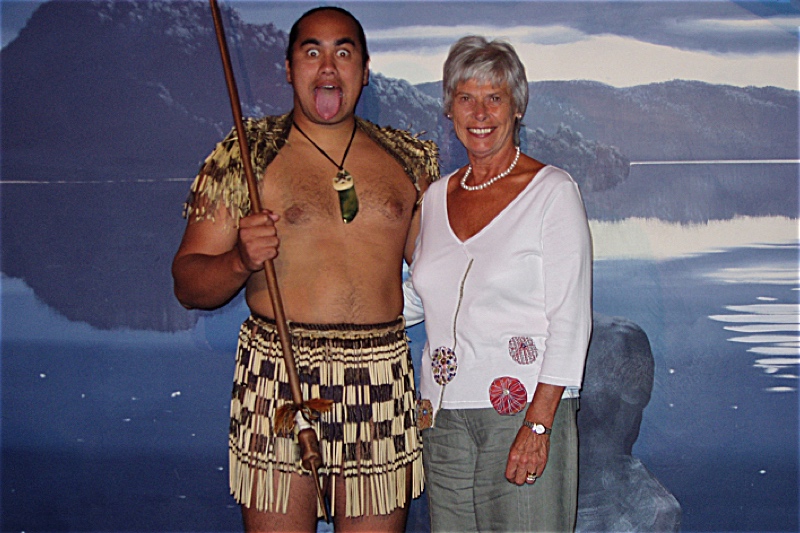
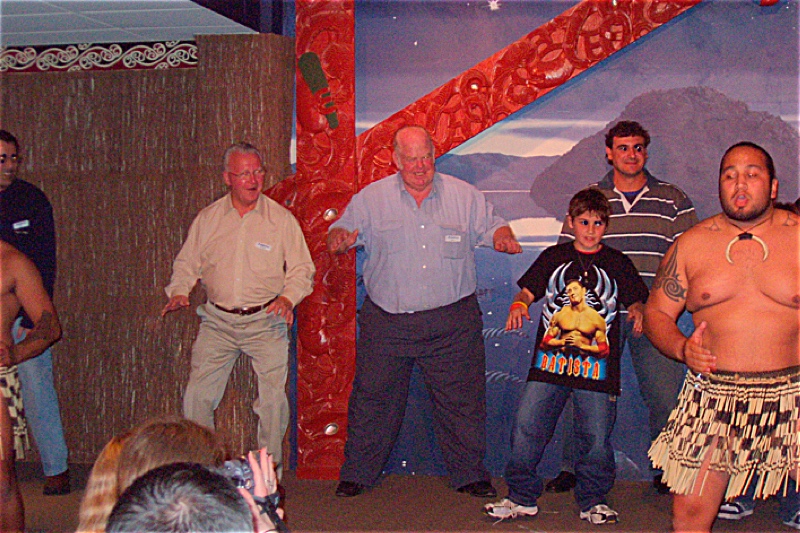
That evening we went to a traditional Maori feast and entertainment. The traditional way was to dig a hole in the ground line it and place your food in, cover it and leave it to cook in the heat of the ground. Health and Safety has reached N/Z so they now cook for us in these large ovens. The food was delicious. We were then entertained to an evening of singing and dancing, Hilary was invited up and asked to put her tongue out, however she said that ladies in Ireland did not put their tongues out. There’s also a photo of me trying to do the Hald!
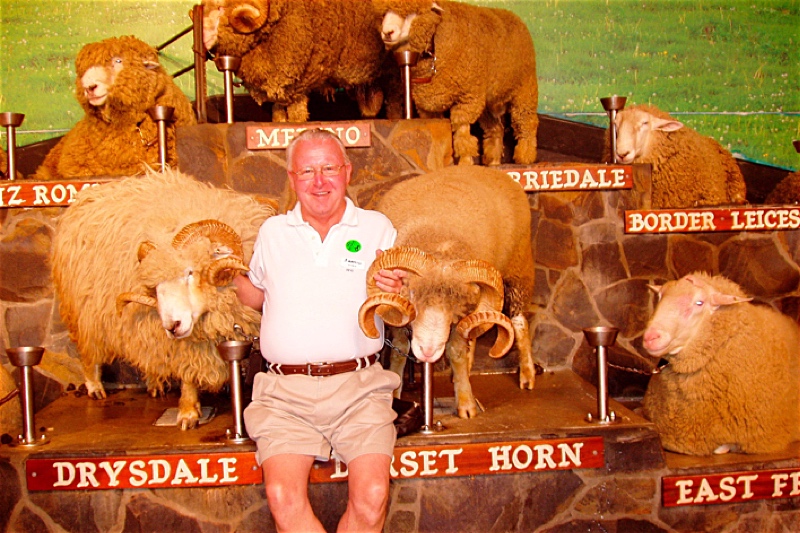
Next morning we visited the Agrodome to get a feeling of life on a sheep farm with demonstrations of sheep control by the dogs. There may be a photograph of several Rams carefully posed with a visitor!
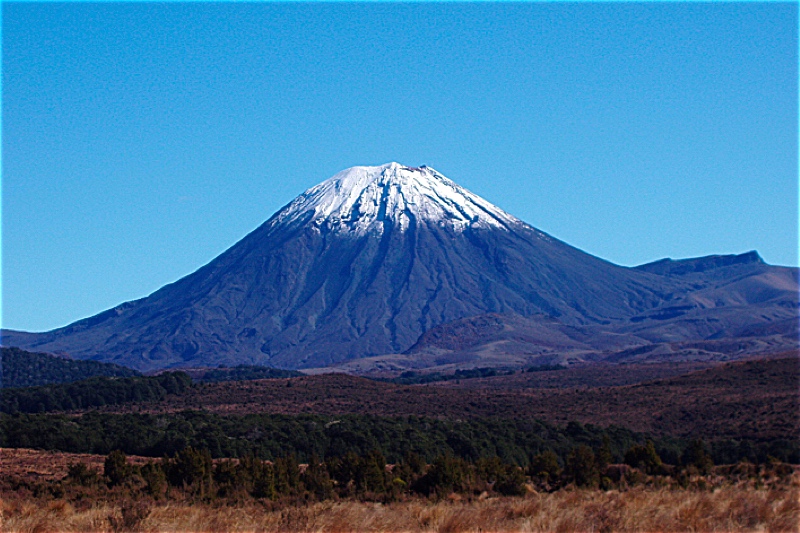
On our way to Wellington travelling through extensive pine forest we reached the Huka Falls on the Waikato river, which drains out of Lake Taupo. One of the most fantastic sites we encountered on our visit. At times 220.000 litres per second flows through. The flow rate is regulated by Taupo. Looking across the lake to Mount Ruapheu 2797 meters. The highest mountain in North Island.
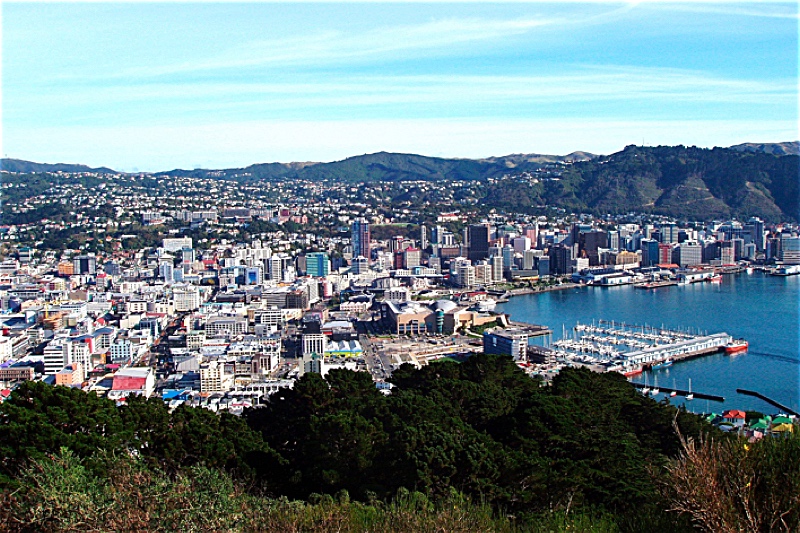
9. We then had a long drive through rich dairy farming territory to Wellington. Wellington has been the nations Capitol since 1865. In 1839 it was chosen as the first major planned settlement for British Immigrants coming to New Zealand and named after Duke of Wellington. It is the second most populous area in NZ with pop' 405.000. It is also the worlds windiest city with average wind speed 26km. and in another survey in 2014 came 12th in the World for the ‘Quality of Living’.
Late afternoon we arrive in Wellington and right across the road from our hotel were this little railway, which took us to a viewpoint over Wellington and to the Botanical Gardens. There is a cable car which was first built in 1902. That evening I had the best lamb shank meal that I had ever had.
Following morning we visit the Parliament buildings the round one is known as the beehive and houses the sittings. Scottish architect Sir Basil Spence provided the original design, which was undertaken by N/Z architect Fergus Sheppard and opened in 1977. There is a wonderful view from Mount Victoria overlooking the City of Wellington and the harbour, from which we were soon to sail.
That evening we went to a traditional Maori feast and entertainment. The traditional way was to dig a hole in the ground line it and place your food in, cover it and leave it to cook in the heat of the ground. Health and Safety has reached N/Z so they now cook for us in these large ovens. The food was delicious. We were then entertained to an evening of singing and dancing, Hilary was invited up and asked to put her tongue out, however she said that ladies in Ireland did not put their tongues out. There’s also a photo of me trying to do the Hald!
Next morning we visited the Agrodome to get a feeling of life on a sheep farm with demonstrations of sheep control by the dogs. There may be a photograph of several Rams carefully posed with a visitor!
On our way to Wellington travelling through extensive pine forest we reached the Huka Falls on the Waikato river, which drains out of Lake Taupo. One of the most fantastic sites we encountered on our visit. At times 220.000 litres per second flows through. The flow rate is regulated by Taupo. Looking across the lake to Mount Ruapheu 2797 meters. The highest mountain in North Island.
9. We then had a long drive through rich dairy farming territory to Wellington. Wellington has been the nations Capitol since 1865. In 1839 it was chosen as the first major planned settlement for British Immigrants coming to New Zealand and named after Duke of Wellington. It is the second most populous area in NZ with pop' 405.000. It is also the worlds windiest city with average wind speed 26km. and in another survey in 2014 came 12th in the World for the ‘Quality of Living’.
Late afternoon we arrive in Wellington and right across the road from our hotel were this little railway, which took us to a viewpoint over Wellington and to the Botanical Gardens. There is a cable car which was first built in 1902. That evening I had the best lamb shank meal that I had ever had.
Following morning we visit the Parliament buildings the round one is known as the beehive and houses the sittings. Scottish architect Sir Basil Spence provided the original design, which was undertaken by N/Z architect Fergus Sheppard and opened in 1977. There is a wonderful view from Mount Victoria overlooking the City of Wellington and the harbour, from which we were soon to sail.



10. and 11. South Island and Christchurch / The Canterbury Plains
10. South Island
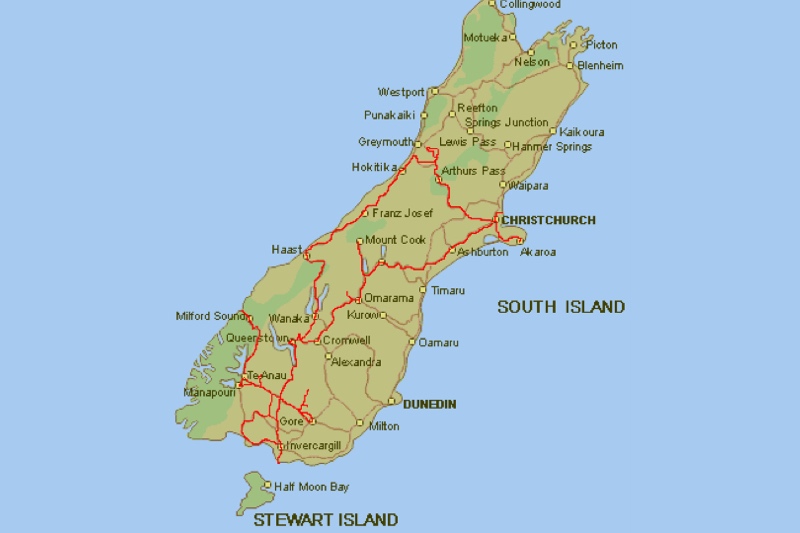
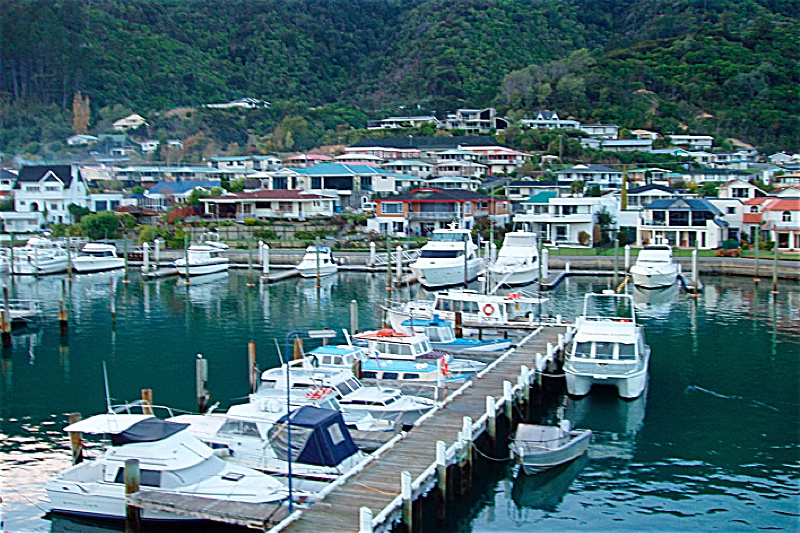
Travelling to South Island took around three hours, and going through the Cook Straits and down Queen Charlotte Sound was a bit like going from Lame to Stranraer. This took around three hours, arriving at dusk in Picton. Picton is a major hub in the NZ transport network connecting the south island road and rail network with ferries to the North Island. It has a population of just over 4000.
We headed down the coast stopping at Kaikoura a centre for whale watching off the coast and for the many bays with fur seals sitting on the rocks. Near Christchurch in the village of Amberley we stopped at this statue to a Captain Charles Upham. Who received in the second world war the VC and Bar. The only combatant to ever receive this. He enlisted in 1939 at 30 became a sergeant very soon. In action in Crete in 1941 he was wounded and won his first VC.
He was evacuated to Egypt where he won the bar to his VC at the First Battle of Alamein in July 42. It was in this battle that he was captured and finished the war eventually in Colditz Castle.
Christchurch. The largest city on South Island with a pop' of 390.000. The river, which flows through, is the Avon named after a river in Ayrshire. Christchurch was used via the port of Lyttelton by the Antarctic expeditions of Scott and Shackleton, and Christchurch airport serves as a base for the N/Z Italian and USA Antarctic programmes. There’s a lovely view of the city from the Port Hills, which loom above Christchurch.
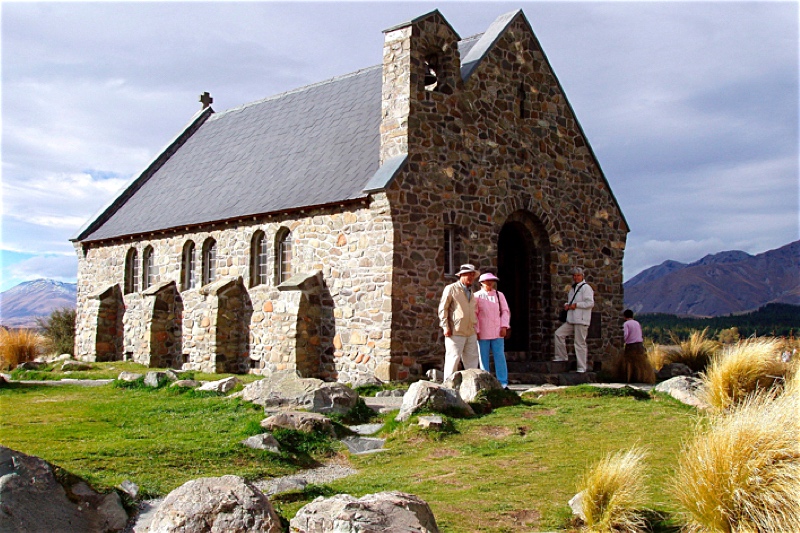
11. Today we travel over the Canterbury Plains and reach Lake Tekapo. We saw a bronze statue of a Collie sheepdog was commissioned by the local residents in recognition of the indispensable role of the animal in their livelihoods. The Church of the Good Shepherd, which in 1935 was the first Church, built in the area, and is arguably one of the most photographed in N. Zealand.
Lake Tekapo is the second largest of three parallel lakes running north south and covers an area of 32 sq miles and is 2330' above sea level. It is about a fifth the size of Lough Neagh. Mount Cook, NZ highest mountain at 3724 meters or 12.218 feet.
Travelling to South Island took around three hours, and going through the Cook Straits and down Queen Charlotte Sound was a bit like going from Lame to Stranraer. This took around three hours, arriving at dusk in Picton. Picton is a major hub in the NZ transport network connecting the south island road and rail network with ferries to the North Island. It has a population of just over 4000.
We headed down the coast stopping at Kaikoura a centre for whale watching off the coast and for the many bays with fur seals sitting on the rocks. Near Christchurch in the village of Amberley we stopped at this statue to a Captain Charles Upham. Who received in the second world war the VC and Bar. The only combatant to ever receive this. He enlisted in 1939 at 30 became a sergeant very soon. In action in Crete in 1941 he was wounded and won his first VC.
He was evacuated to Egypt where he won the bar to his VC at the First Battle of Alamein in July 42. It was in this battle that he was captured and finished the war eventually in Colditz Castle.
Christchurch. The largest city on South Island with a pop' of 390.000. The river, which flows through, is the Avon named after a river in Ayrshire. Christchurch was used via the port of Lyttelton by the Antarctic expeditions of Scott and Shackleton, and Christchurch airport serves as a base for the N/Z Italian and USA Antarctic programmes. There’s a lovely view of the city from the Port Hills, which loom above Christchurch.
11. Today we travel over the Canterbury Plains and reach Lake Tekapo. We saw a bronze statue of a Collie sheepdog was commissioned by the local residents in recognition of the indispensable role of the animal in their livelihoods. The Church of the Good Shepherd, which in 1935 was the first Church, built in the area, and is arguably one of the most photographed in N. Zealand.
Lake Tekapo is the second largest of three parallel lakes running north south and covers an area of 32 sq miles and is 2330' above sea level. It is about a fifth the size of Lough Neagh. Mount Cook, NZ highest mountain at 3724 meters or 12.218 feet.




12. and 13. Dunedin / Queenstown
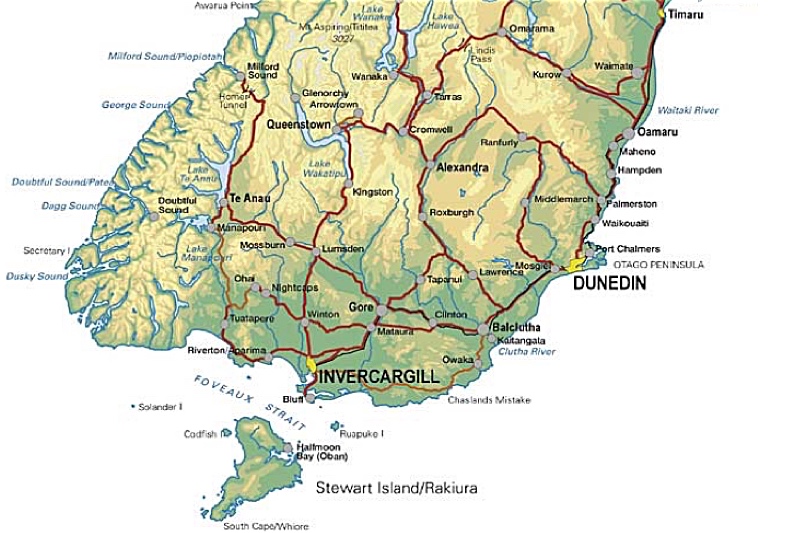
12. Dunedin. The name comes from the Gaelic Dun Eideann meaning Edinburgh. The population here is 127.000 and it is the furthest city in the world from London - 11870 miles. We were very impressed with Dunedin, very open with lovely buildings. There is a Robbie Bums Statue, and his nephew Thomas Bums was a minster at First Church of Otago. St. Pauls Cathedral is just next door to the Town Hall, and the Dunedin Presbyterian First Church is close by. It is a lovely building, and more ornate than the Presbyterian Churches here.
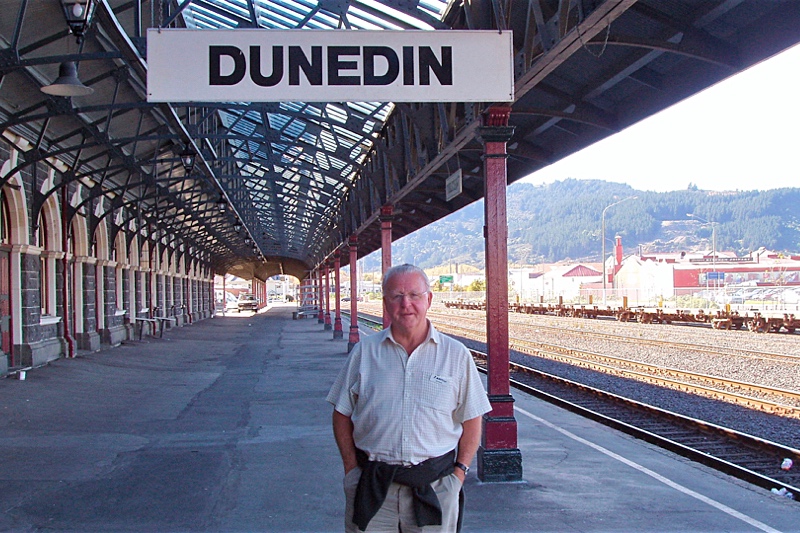
Larnach Castle New Zealand's only authentic castle. Built in 1874 by local businessman and Politician William Larnach. Dunedin has the most ornate Railway station I have ever visited and now used as a museum. there is a photo of one of the steep streets in Dunedin. In fact this street - Baldwin Street - holds the Guinness book record as the steepest residential in the world..
Today we cross the rich fertile countryside of South Otago, heading West to Milford Sound staying on the way at Te Anau, which is on the shores of Lake Te Anau the largest lake on South Island.
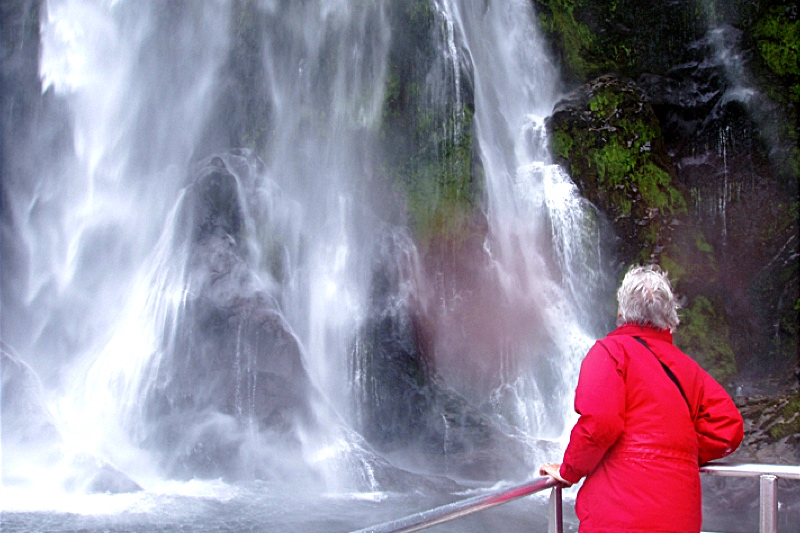
13. This journey to Milford Sound was probably the most spectacular of the whole trip. When we got to the boat unfortunately the weather did not do us any favours. And so on to Queenstown.
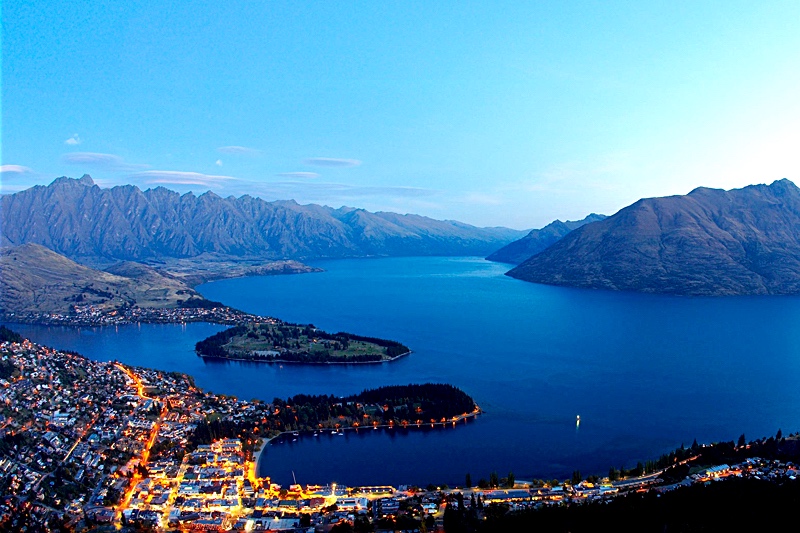
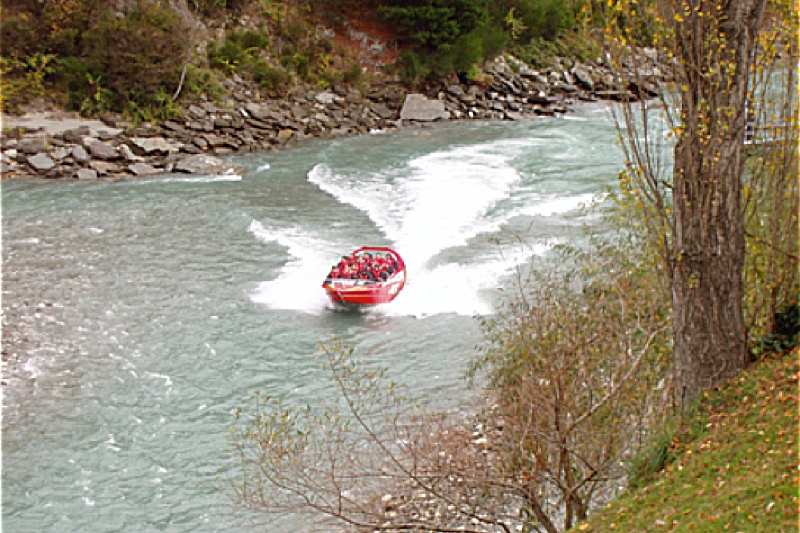
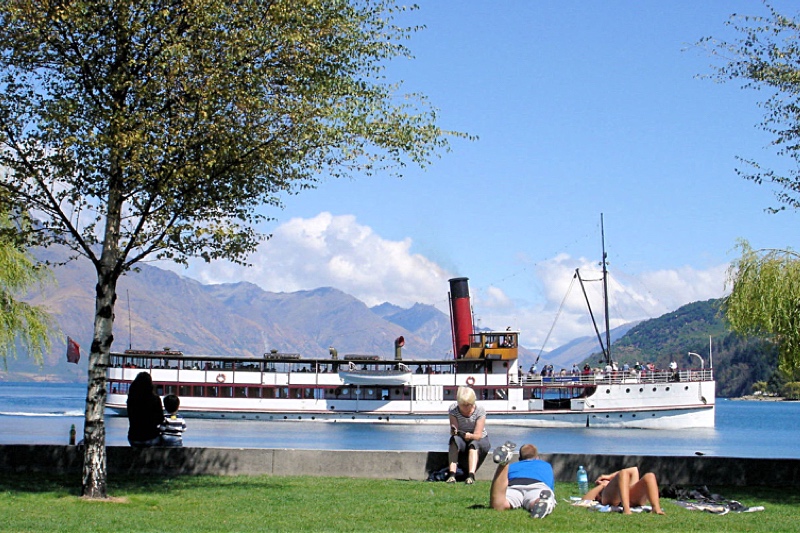
Queenstown has the reputation of being ‘The fun town of New Zealand’ with its Bungee Jumping, White water Rafting and Skiing in the Winter. It has a population of 15,500 and sits on the shore of Lake Wakatipu on which the TSS Earnshaw has daily trips and is over 100 years old. Sam Neill the actor who was born in Omagh has two vineyards outside Queenstown.
Larnach Castle New Zealand's only authentic castle. Built in 1874 by local businessman and Politician William Larnach. Dunedin has the most ornate Railway station I have ever visited and now used as a museum. there is a photo of one of the steep streets in Dunedin. In fact this street - Baldwin Street - holds the Guinness book record as the steepest residential in the world..
Today we cross the rich fertile countryside of South Otago, heading West to Milford Sound staying on the way at Te Anau, which is on the shores of Lake Te Anau the largest lake on South Island.
13. This journey to Milford Sound was probably the most spectacular of the whole trip. When we got to the boat unfortunately the weather did not do us any favours. And so on to Queenstown.
Queenstown has the reputation of being ‘The fun town of New Zealand’ with its Bungee Jumping, White water Rafting and Skiing in the Winter. It has a population of 15,500 and sits on the shore of Lake Wakatipu on which the TSS Earnshaw has daily trips and is over 100 years old. Sam Neill the actor who was born in Omagh has two vineyards outside Queenstown.




14. and 15. Arrowtown and the Haast Pass / Saying goodbye to New Zealand
14. The next morning we left Queenstown and stopped in an old mining town called Arrowtown, and they just happened to be having a fete that day. They are endeavouring to keep this town looking as it was for a tourist stop. We then motored north past Lake Wanaka passing many vineyards and up through the Haast Pass reaching the West Coast, motoring up the coast to the village of Fox Glacier.
We were to take a helicopter trip but unfortunately the weather closed in and all we could do was trek a mile up the edge of it. Next morning was just as bad so after hanging about for an hour we continued our journey North through Hokitika. Where Jade carving seems to be the made industry.
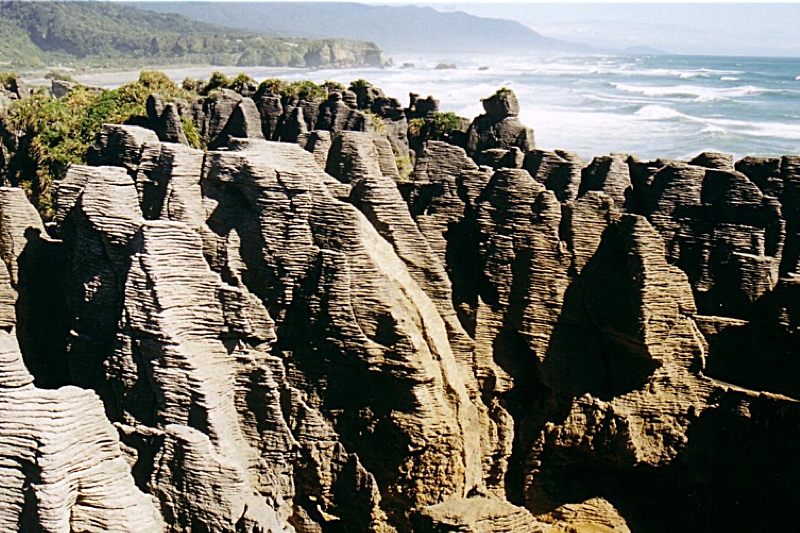
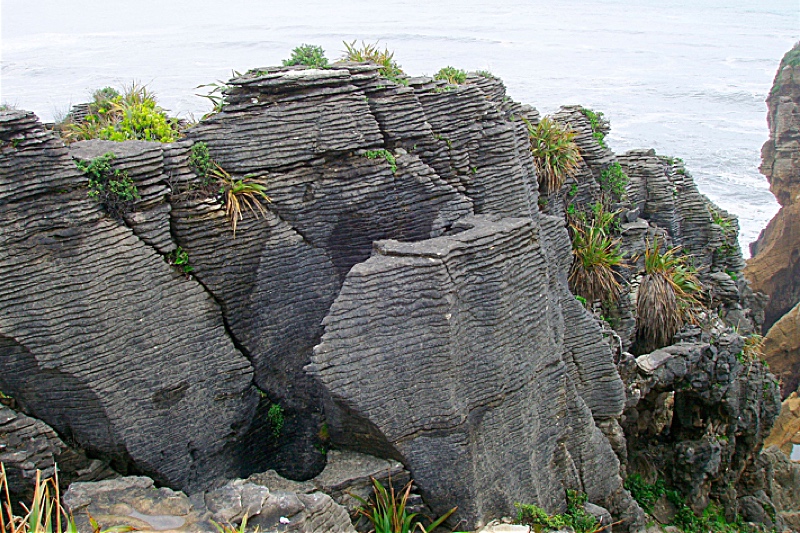
After Lunch we arrive at Punakiki. New Zealand's answer to the Causeway, and I must say very spectacular.
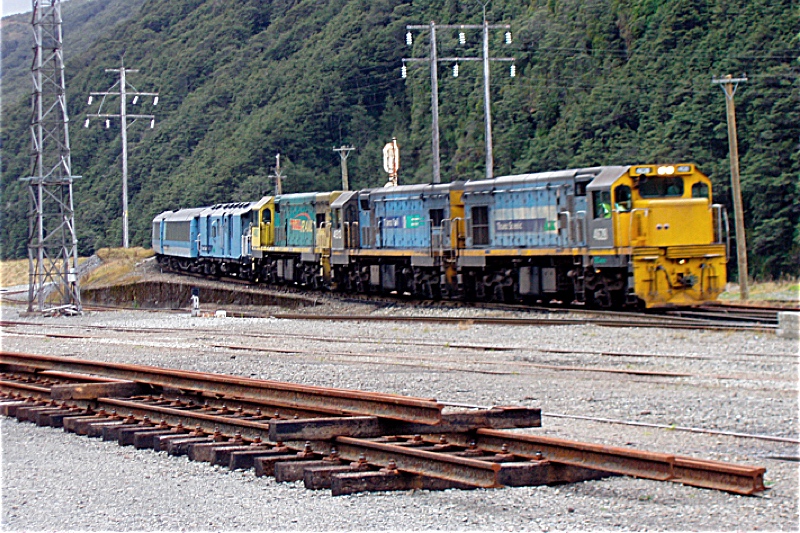
15. At Greymouth most of the bus passengers leave to take the Transalpine train back to Christchurch, via Arthur's Pass.
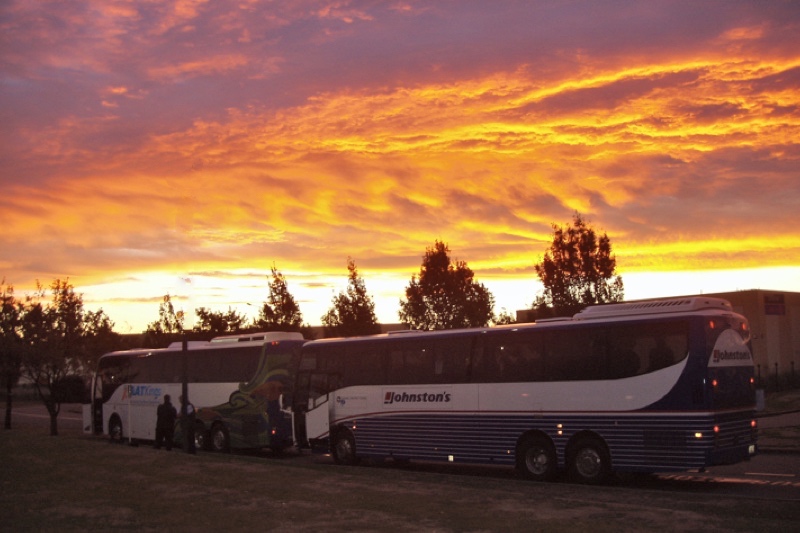
We stay on the bus and the view was worth staying on for. Waiting at the station for our companions and a wonderful sky for our last night in New Zealand
We were to take a helicopter trip but unfortunately the weather closed in and all we could do was trek a mile up the edge of it. Next morning was just as bad so after hanging about for an hour we continued our journey North through Hokitika. Where Jade carving seems to be the made industry.
After Lunch we arrive at Punakiki. New Zealand's answer to the Causeway, and I must say very spectacular.
15. At Greymouth most of the bus passengers leave to take the Transalpine train back to Christchurch, via Arthur's Pass.
We stay on the bus and the view was worth staying on for. Waiting at the station for our companions and a wonderful sky for our last night in New Zealand