Speaker for 21st March 2017
Coleraine Probus, thinking about 'Humanities today'
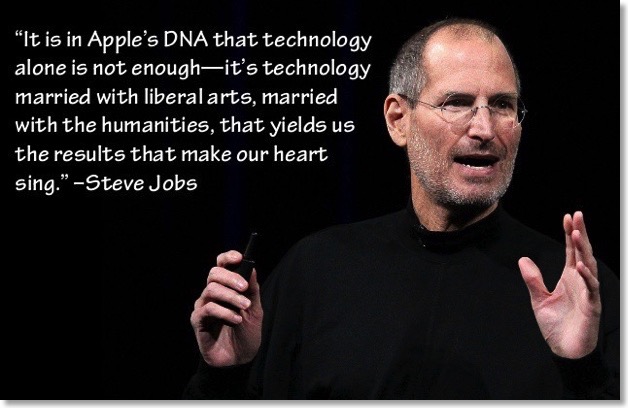
The regular weekly speaker's meeting at Coleraine Probus is always interesting, generally entertaining, but seldom as thought provoking and challenging as when Professor John Thompson gave a recent talk. The topic of the professor's discussion was 'The Importance of Humanities Today', and it came with a 'health warning' - the views expressed in the talk were purely those of Professor Thompson, 'even colleagues may not agree with me' he said.
John works at Queens University in Belfast where he heads the 'Institute for Collaborative Research in the Humanities'. The question 'What is Humanities' can be answered along the lines of:- "Humanities can be described as the study of how people process and document the human experience. Since humans have been able, we have used philosophy, literature, religion, art, music, history and language to understand and record our world". Which sounds fine, but there is a doubt as to just where that gets anyone going to university in search of a career. John answered this with a possible real life example:- An engineering graduate is likely to ask 'How does this work?' as they begin an engineering career. A science graduate is likely to ask 'Why does this work?' as they begin a new research career. A humanities graduate is likely to ask 'Would you like extra chips with that' in their job at MacDonald's or somewhere that will take them on. Yes, the common perception of 'Humanities' as a career is not an encouraging one. In John's view, we are becoming obsessed with the notion that education is for vocation alone.

Professor Thompson went on to argue and illustrate, that by studying and documenting how we live our lives; how we communicate; what we read, listen to and see; where we work and how we interact with others, is becoming more and more important. This is evident within our rapidly expanding global population, the workings of ever growing multi-national companies and by the divisions within our societies. An example of this could be seen in something close to home:- 'Just imagine how much Policing resources could be saved on 12th July IF people could see things from one another's point of view?'. Is empathy possible?
John went on to tell the members about some of the studies, and their outcomes, that had been initiated by his Institute at Queens. These included a look at the tourism industry in Northern Ireland and getting it changed from a focus on 'Dark Tourism' - involving travel to sites historically associated with death and tragedy - to that of 'Phoenix Tourism' - focusing on social renewal, the people, the locations and the willingness to embrace change and a positive future. Take a look at the success of 'Game of Thrones' and the film industry for an example of this. Another project has linked the institute with the massive BBC NI's Archive. This has resulted in a hugely valuable source of information on the life and culture of the people of Ulster. The idea that music is one of the great resources in Northern Ireland and a catalytic agent that changes lives for the better, is behind a project on creativity and popular culture currently being researched at the Institute. A final example John gave is the ongoing work around the history of working-class lives, traced through the massive archives from the shipyard in Belfast. This work is establishing strong links between the University and working-class communities, as it begins to uncover and celebrate stories of working-class life through its social history research.

There was much for members to reflect upon in John's talk. This was especially true when they thought of one of the global facts that John had mentioned - China is currently investing 'Trillions of Dollars' (yes, TRILLIONS) in the Arts and Humanities, to better understand the markets for it's world dominating production lines. Is THAT then the answer to 'The Importance of Humanities Today'?